

glossary
Ad Fraud
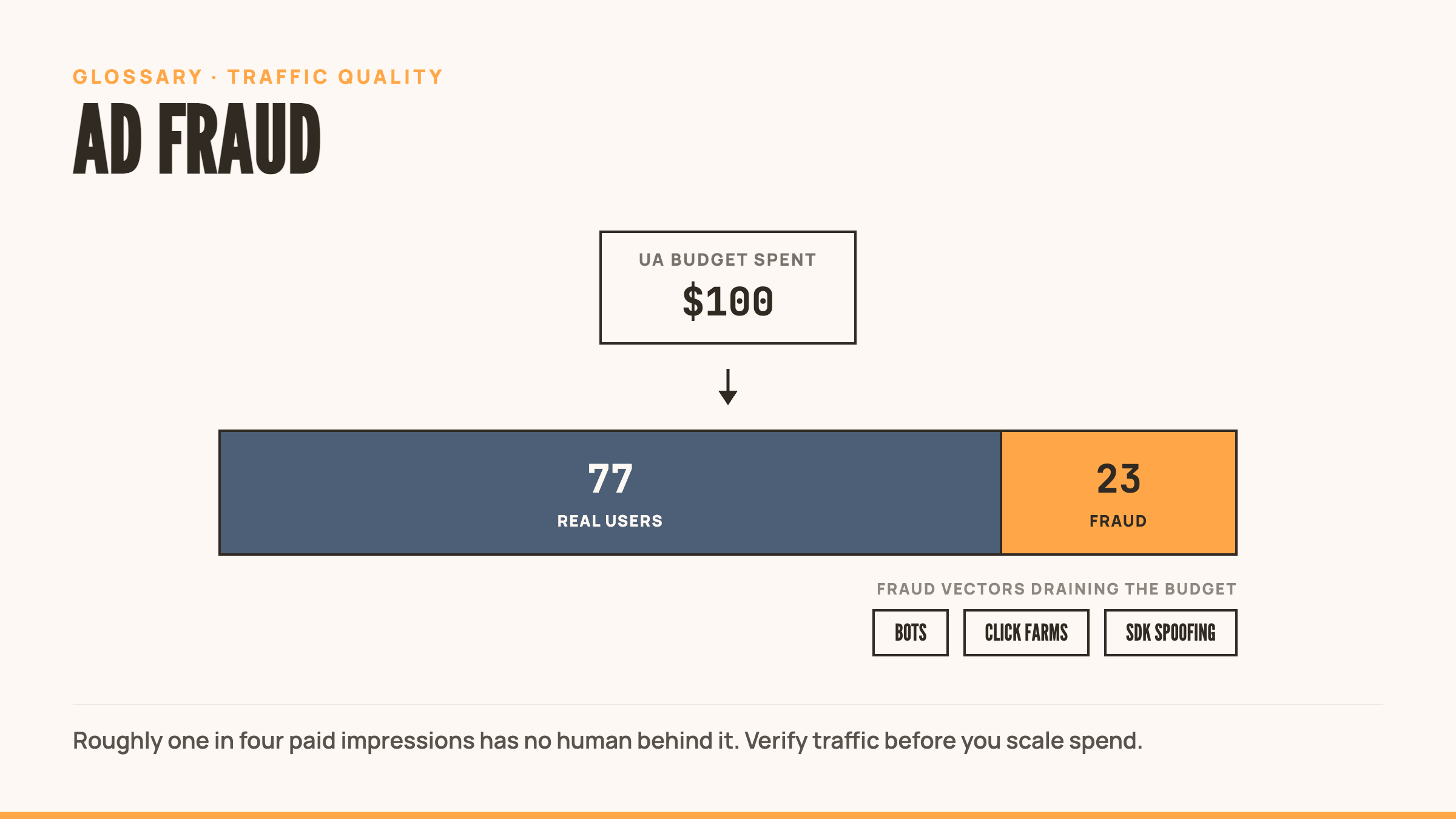
Fake impressions, clicks, installs, or conversions created to steal ad spend. Bots, click farms, and SDK spoofing drain budgets while delivering zero real users.
Quick Definition
Fake impressions, clicks, installs, or conversions created to steal ad spend. Bots, click farms, and SDK spoofing drain budgets while delivering zero real users.
What is Ad Fraud?
Ad fraud is the practice of generating fake ad interactions to siphon money from advertisers. Fraudsters create the appearance of legitimate user behavior without any real person behind it.
In mobile UA, this means paying for installs that never happened, clicks from bots, or conversions from fake users. You’re bleeding budget on traffic that will never convert, never play your game, never spend a dollar.
The fraud ecosystem scales fast. What used to be manual click farms now runs on AI-powered bot networks that mimic real user behavior patterns. They adapt to detection methods, rotate IP addresses, and forge device fingerprints.
Types of Ad Fraud
Click Fraud/Bots Automated scripts generate clicks on ads. Looks like traffic, delivers nothing.
Click Spamming Fraudsters click ads for apps users already have installed. When the user naturally opens the app, the fraudster claims credit for the “install.”
Click Injection Malware detects when a user downloads an app, then fires a fake click milliseconds before install completes. Steals attribution from legitimate sources.
SDK Spoofing Fake install events sent directly to attribution platforms without any real app install. Pure fabrication at the API level.
Ad Stacking Multiple ads stacked in a single placement. User sees one ad, fraudster claims impressions for dozens hidden underneath.
Pixel Stuffing Ads rendered in 1×1 pixel windows. Invisible to users, counted as impressions.
Install Farms Real devices, fake behavior. People paid to install apps, open them once, and uninstall. Technically real installs, functionally worthless.
Scale of the Problem
Mobile ad fraud loses the industry serious money. Juniper Research projects $172 billion in losses by 2028 across all digital advertising.
In 2024, roughly 23% of mobile in-app ad impressions were invalid traffic. Nearly one in four impressions you paid for were fake. That number varies a lot by region: Pixalate’s benchmarks put APAC fraud rates near 30% while North America runs closer to 17%.
The fraud gets more sophisticated every year. AI-powered bots now mimic real user behavior patterns well enough to slip past basic detection. CTV and OTT platforms are seeing massive fraud expansion as budgets shift to those channels.
You can’t ignore this. It’s not a minor tax on performance. It’s a structural problem eating your budget and corrupting your data.
Prevention Methods
Fraud Detection Tools Platforms like Adjust, AppsFlyer, and Singular offer fraud prevention built into attribution. They flag suspicious patterns in real-time.
Verification Partners Third-party services audit traffic sources and certify legitimate inventory. Not foolproof, but adds a layer of protection.
AI/ML Detection Machine learning models analyze behavioral patterns to spot bot traffic. The best systems adapt as fraud tactics evolve.
Transparency with Partners Demand visibility into where your ads run. Blacklist sources with high fraud rates. Cut networks that won’t show you the data.
Trusted Networks Only Work with established ad networks that have fraud prevention incentives. Cheaper traffic sources often come with higher fraud rates.
Common Mistakes
Chasing cheap CPI without checking quality Low install costs mean nothing if half the users are fake. Quality traffic costs more because it’s real.
Ignoring post-install behavior Fraudsters optimize for install events. Real users play the game. Track Day 1, Day 7 retention. If installs don’t retain, you’re buying fraud.
Not monitoring attribution patterns Sudden spikes in installs from new sources deserve scrutiny. Legitimate growth is rarely instant.
Trusting self-reported metrics from networks Verify independently. Networks reporting their own fraud rates is like asking suspects to investigate themselves.
Assuming fraud is someone else’s problem Every advertiser running UA campaigns deals with fraud. Budget for it, monitor for it, fight it constantly.
Related Terms
- Attribution – How installs get credited to traffic sources
- CPI – Cost Per Install, the metric fraud attacks most often
- Invalid Traffic (IVT) – Broader category including fraud and accidents
- Retention Rate – Key metric for spotting fraudulent installs
- SDK – Software Development Kit, target of SDK spoofing attacks
External Resources
Frequently Asked Questions
What is an example of ad fraud?
Click fraud (bots clicking ads), SDK spoofing (fake install events sent straight to attribution platforms), click injection, ad stacking, and install farms are the most common types hitting mobile UA budgets.
What is the most common type of ad fraud?
Click fraud. Automated bots or click farms generate clicks on ads with zero intent to convert, inflating click volume and draining spend on traffic that was never real.
How much of my UA budget is going to fraud?
Industry average sits around 20-25% of impressions as invalid traffic. Your real exposure depends on your traffic sources and detection setup. Check post-install behavior to find your actual number.
Can I eliminate ad fraud completely?
No. You can minimize it with fraud detection tools, verification partners, and trusted ad networks, but sophisticated fraud will always slip through some of your funnel.